
...
Home/Blog

Blog

What are the key pinciples of sustainable diet for weight loss
26/05/2026

Lisa AdamsLisa AdamsBSc (Medicine), UNSW | Masters in Nutrition & Dietetics (Hons), Griffith University | Graduate Certificate in Diabetes, Curtin University | Accredited Practising Dietitian and Nutritionist. A sustainable diet for weight loss is an eating pattern that helps you lose fat without the rebound cycle of yo‑yo dieting, extreme restriction, and burnout. Evidence‑based nutrition guidance, including advice consistent with the NHS and WHO, supports a moderate calorie deficit, strong satiety, enough protein, and behaviour change that lasts, which is why the Mediterranean diet and DASH diet are often used as practical models.The key principles of a sustainable diet for weight loss are the core habits that make this pattern work in real life. These principles together form an approach that replaces quick fixes with a realistic, repeatable way of eating you can follow long term.Implicitly, the key principles of a sustainable diet for weight loss are:A moderate calorie deficit that fits your energy needs and lifestyle instead of aggressive cutting.An emphasis on protein and satiety so meals feel full and cravings are easier to manage.Meals built around whole foods and high‑volume, low‑energy‑density options to naturally reduce calories.Food flexibility and no strict bans, so you can enjoy treats and social eating without guilt.Attention to hunger and fullness signals and simple meal timing so eating feels structured but not rigid.Reliance on behaviour change and habit formation (like simple routines) instead of willpower alone.A plan that fits your real life, including work, family, and social events, so long‑term adherence is high.What Are the 7 Key Principles of a Sustainable Diet for Weight Loss?A sustainable weight-loss diet is built on habits you can maintain …

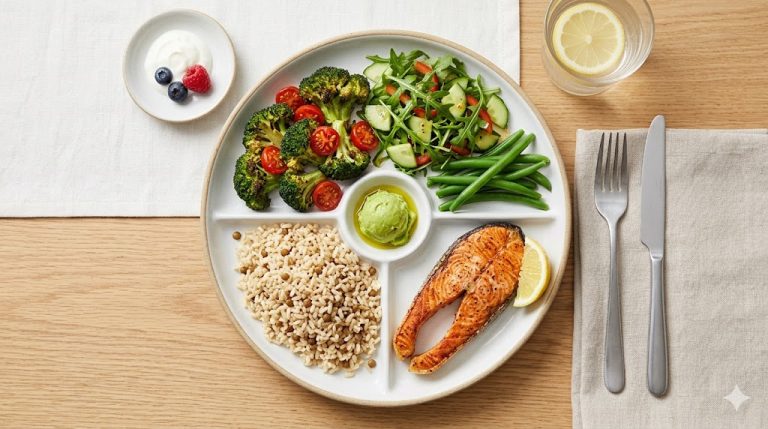
Balanced diet plate model showing five food groups Australia
07/05/2026

A balanced diet is more than just a fleeting wellness trend; it is a meticulously structured approach to eating that ensures your body receives a comprehensive spectrum of nourishment. Explicitly defined, a balanced diet is a sustainable eating pattern that incorporates the correct proportions of foods from all five core groups—vegetables, fruit, grains, protein, and dairy—to meet an individual's unique physiological requirements. By prioritizing variety over restriction, this dietary foundation provides the essential nutrients—macronutrients (carbohydrates, protein, fat) and micronutrients (vitamins, minerals)—needed to function properly, maintain energy, and prevent disease.As Accredited Practising Dietitians, we see firsthand how this synergy between macronutrients, which serve as the body’s primary fuel, and micronutrients, which act as vital catalysts for metabolic health, transforms lives. For Australians navigating busy lifestyles in Brisbane or the Gold Coast, achieving this balance means moving away from rigid, short-term dieting and toward a practical, evidence-based framework. This approach doesn't just manage weight; it builds long-term physical health, mental clarity, and metabolic resilience at every stage of life.What Is a Balanced Diet?A balanced diet provides your body with the essential nutrients, vitamins, and minerals it needs to function correctly, maintain energy levels, and prevent chronic diseases.Most people know they "should" eat better. But what does that actually mean?The phrase "balanced diet" gets thrown around constantly — by doctors, media, wellness influencers, and food packaging. Yet for many Australians, it remains frustratingly vague. What foods count? How much of each? Does it change depending on your age, health condition, or goals?At Apple …

Dietitian vs. Nutritionistin Brisbane
22/04/2026

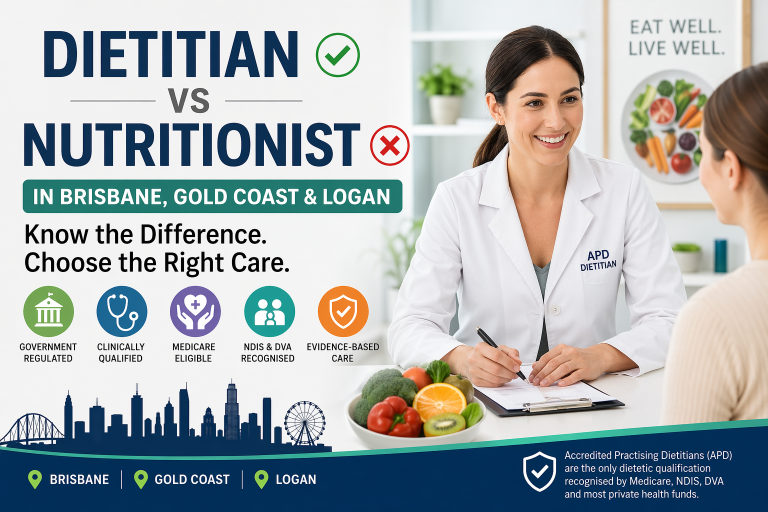
In Brisbane, Gold Coast, and Logan, a dietitian is a government-regulated allied health professional with a minimum four-year accredited degree and Accredited Practising Dietitian (APD) status — recognised by Medicare, NDIS, DVA, and most private health funds. A nutritionist is an unprotected title in Australia: anyone can use it regardless of qualifications. For chronic conditions, funded care, or clinical nutrition management, always see an APD dietitian. If you've typed "nutritionist near me Brisbane" or "dietitian Gold Coast" into Google recently, you've seen both titles used side by side — often interchangeably. But in Queensland, as across all of Australia, these are fundamentally different professions with different legal protections, different scopes of practice, and very different funding pathways. Getting this wrong can cost you money, delay treatment, or leave you with advice that isn't backed by clinical evidence. This guide is written specifically for residents of Brisbane, the Gold Coast, Logan, and the broader South-East Queensland corridor — covering what local access looks like, how to claim your Medicare entitlements, and exactly what questions to ask before you book. What Is the Difference Between a Dietitian and a Nutritionist in Brisbane? The core difference comes down to regulation and clinical training. A dietitian practising in Brisbane, the Gold Coast, or Logan must have completed an accredited university degree — typically four to five years — including supervised clinical placements in hospitals, aged care facilities, and community health settings. After graduation, they apply for Accredited Practising Dietitian (APD) status through Dietitians Australia. …

NDIS Dietitian: Nutrition and Feeding Support for Participants
09/04/2026

If you or a loved one lives with a disability, everyday tasks like eating, drinking, and preparing meals can quickly become more complicated than they first appear. This is where nutrition and feeding support under the NDIS becomes important. An Accredited Practising Dietitian (APD) can help NDIS participants eat safely, meet their energy and nutrient needs, and build greater independence in daily living. Dietitians work within an NDIS plan to assess feeding challenges, manage swallowing difficulties, support tube‑feeding if needed, and help participants gradually accept a wider variety of nutritious foods. They also teach meal planning, grocery shopping, and simple cooking skills so participants can do more for themselves. This article explains, step by step, how a dietitian provides NDIS nutrition and feeding support to improve health, safety, and participation in daily life. What Is NDIS Nutrition and Feeding Support? NDIS nutrition and feeding support means providing tailored help so participants can eat and drink safely, meet their energy and nutrient needs, and overcome food‑related challenges. This includes: Under the NDIS, dietitians most commonly work under “Capacity Building: Improved Daily Living,” focusing on building skills and independence. In some situations, they also contribute to Core Supports discussions by providing allied‑health reports that justify mealtime or feeding‑related funding. Who Can Access Dietitian Services Through the NDIS? NDIS‑funded dietitian services are designed for participants whose disability, medical condition, or feeding challenges affect their ability to eat safely, maintain a healthy weight, or manage a chronic health condition. This includes: If a participant’s …

23/02/2026

Sustainable weight loss involves losing weight at a steady, realistic pace and maintaining that lower weight through long‑term lifestyle habits rather than short‑term, extreme diets. It means focusing on gradual changes you can live with for life, not quick fixes that lead to rapid regain.In simple terms, sustainable weight loss is a long‑term approach to effective weight management where you improve your eating patterns, movement, sleep, and stress control in ways that fit your real life. Instead of rigid rules, it builds flexible routines that help you keep a healthy body weight and support overall well‑being over months and years.Key strategies for sustainable weight loss include eating mostly whole, minimally processed foods in appropriate portions; practicing mindful eating so you can recognise true hunger and fullness, and staying hydrated throughout the day to support metabolism and reduce mistaking thirst for hunger. Consistent resistance training helps preserve or build muscle mass, which keeps your metabolism higher and makes it easier to maintain fat loss over time, while regular movement in general (walking, cycling, taking the stairs) adds to daily energy burn. A well‑designed weight loss plan also accounts for your preferences, schedule, and cultural food choices so you can stick with it, turning short‑term efforts into lasting habits that support both a healthier weight and a better quality of life.What Does Sustainable Weight Loss Mean?Sustainable weight loss is the process of achieving and maintaining a healthier body weight through gradual change. It's realistic changes that become lifelong habits rather than temporary …

09/08/2022

Pain and pleasure are two of the most powerful motivators. If you are considering changing your behaviour, it is critical that you understand why you are acting the way you do. Overeating and stress have a close relationship. The pleasure centre of your brain is activated when you eat good food. When you begin eating, the central part of your brain lights up and releases chemicals that help you feel good. It is more common when you consume foods with a high sugar or fat content. This implies that you will do anything to avoid suffering rather than suffer in silence and eating good food that makes you happy is one way to get rid of all the pain and depression. Your mood can also be dependent on your gut health. Three basic steps to avoid stress eating Make sure that you keep the following things in mind in order to avoid stress eating: Create awareness in yourself A typical day for someone who eats normally would consist of three main meal courses and a few snacks in between. This may differ for a shift worker, so it is critical that people who work shifts need proper nutrition. When it comes to choosing, however, some people may prefer more healthy options. It is critical that the foods you choose to eat belong to different food groups. Your diet should include a healthy balance of carbohydrates and proteins, as well as fats and sugars on occasion. Overeating until you feel you …

09/08/2022

Making health a priority for those who work in shifts can be difficult. It is critical to understand the science behind how and when our bodies use different foods. This knowledge can help us make better decisions and prevent late-night shifts from negatively impacting our health. Our bodies are accustomed to a certain routine, and if you begin working outside of the typical nine to five schedule, your body will become confused. Working at night contradicts our circadian rhythm, which serves as our body clock. Typically, there are different processes that occur in the morning and processes that occur at night. Your circadian rhythm ensures that your body uses energy wisely, and if it does not, it may begin to affect other organs as well. During the night, digestion slows down. This is why the body does not break down food or any other component as well at night as it does during the day. Also, our bodies burn less energy at night, so anything you eat after 9pm will be far more than your body can handle. If you do this for an extended period of time, you may increase your risk of heart disease, type 2 diabetes, and weight gain. Anyone who works shifts understands how difficult it is to maintain a healthy diet. On the other hand, there may be some factors beyond your control. Workers eat most of the time to combat fatigue and stay awake. Shift workers may find themselves stress eating and turning to …

09/08/2022

What Is the Gut-Brain Axis? The gut-brain axis is the two-way communication network between your gastrointestinal tract and your central nervous system. It is not a metaphor. It is a real, physical, biochemical highway — made up of nerves, hormones, and immune signals — that allows your gut and your brain to talk to each other constantly. At the centre of this network is the vagus nerve: the longest nerve in the body, running from the brainstem all the way down through the neck, chest, and abdomen. Approximately 80% of the information travelling along the vagus nerve flows from the gut to the brain — not the other way around. This means your gut is sending far more messages to your brain than your brain sends back. Your gut also has its own independent nervous system, called the enteric nervous system, which contains more than 500 million neurons. This is why the gut is often called the "second brain." It can sense, process, and respond to information without any input from the brain at all. The gut-brain axis is not just a scientific curiosity. It is the reason why psychological stress causes physical gut symptoms — and why gut dysfunction causes psychological symptoms. The communication runs in both directions, and disruption at either end affects the other. The pandemic has undoubtedly had an impact on our mental health. Not only have we been influenced by the major upheaval, but so have a large number of other people. There has been …

21/03/2020

Supermarkets are slightly scary places at the moment as Australia prepares for the unknown. Will we be quarantined? Will we be stuck at home? Do we want to brave the supermarket as this pandemic escalates? Temporary product shortages abound as we panic-buy life’s essentials and although there’s no need to hoard, it makes sense to try to minimize trips to the supermarket and stock up a little. So we may have to be a bit adaptable and flexible with our food choices. At the same time we need to be trying to keep our bodies and immune systems healthy, so healthy eating is important. Here’s the Apple-A-Day Dietetics guide to pantry staples to grab if you can: Legumes – a lot of people are onto this already, but legumes are a versatile vegetable that provide protein, low GI carbohydrates, plenty of fibre and are a good source of iron. Tinned or dried are both good options, though dried will take longer to cook. These could be made into a curry eg dahl, thrown through a pasta dish or salad, made into burgers or used to extend meat dishes, among many other options.Canned fish – Excellent protein source and a good source of immune boosting omega 3 fats. Buy bigger tins for better value. Can be mixed through pasta, made into rissoles, used as a sandwich filling or just eaten straight!Nuts and nut butters – Nuts and nut butters provide healthy fats and protein and store really well. Seeds like chia …

  • 1
  • 2
Seraphinite AcceleratorOptimized by Seraphinite Accelerator
Turns on site high speed to be attractive for people and search engines.